Why do casino games keep familiar shapes when they move to screens?
A roulette table on a phone is not a table in any practical sense. There is no baize to lean over, no chips to place by hand and, in a digital game, no wheel for a croupier to spin. Yet the screen may still show a circular wheel beside a familiar betting layout. A slot game may present spinning reels, even when its symbols are being generated and displayed by software rather than moved on mechanical drums.
These shapes persist because they do more than decorate a game. They organise actions, make choices legible and help players recognise what kind of activity is taking place. The visual language of casino games is built from objects and conventions developed in particular settings. When a game moves to a screen, designers can discard the original equipment—but often retain its most useful visual cues.
That continuity should not be mistaken for mechanical continuity. A drawing of a wheel does not establish that a physical wheel is operating, and animated reels do not prove that a digital slot works like a mechanical machine. To understand why familiar forms endure, it helps to look at the objects themselves: what players did with them, what they made visible and how they recorded a result.
Start with the objects, not the screen
Casino games have histories as arrangements of material things. A table, a wheel, a deck of cards, chips, markers and printed rules all help define how a game is played. They are not simply props around an abstract set of rules. Their dimensions, surfaces and positions shape the available actions.
Consider a traditional roulette setting. The game involves a wheel, but it also involves a table layout marked with numbers and betting areas. Players place chips on that layout to indicate wagers; the wheel and ball produce the result. These are distinct parts of the equipment, doing different jobs. The betting layout is not just a decorative picture of the wheel, nor is every roulette layout interchangeable. Number arrangements and table formats can vary, so calling all roulette wheels or tables “the same” obscures meaningful differences.
Other games make different relationships between equipment and action. A card table gives players a shared surface on which cards, wagers or hands can be placed and read. A slot machine brings the outcome display and the player’s control into a single cabinet. In both cases, the shape and placement of components help answer basic questions: Where do I act? What can I choose? What counts as the result?

This is an object-led way of understanding casino history. Instead of seeing digital games as wholly new products, it traces how familiar arrangements of action and information are carried into new materials. Sometimes the carry-over is practical. Sometimes it is a visual convention. Often it is both.
Equipment shapes gameplay actions
Physical equipment gives a game a choreography. Players reach, place, draw, turn, press or wait. The surface and controls make certain actions easy to understand, while rules tell players what those actions mean.
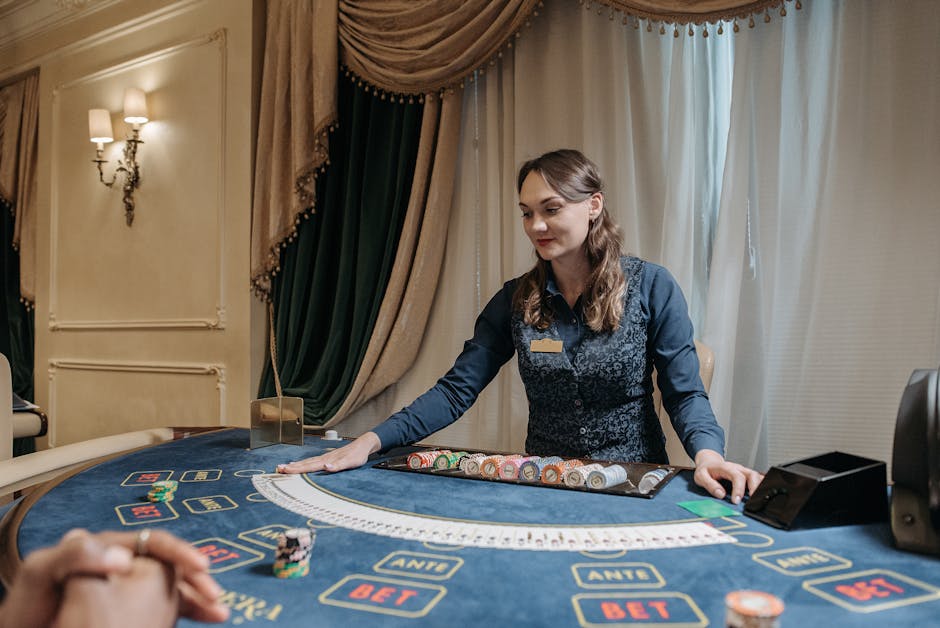
At a roulette table, for example, the marked betting areas translate a player’s intention into a visible placement. A chip on a particular number communicates one wager; chips spread across a group of marked positions communicate another. The table makes the choice legible to the player and, in a shared setting, to the croupier and other participants. The wheel is a separate part of the sequence: it sets the ball in motion and displays the outcome.
A screen cannot reproduce the feel or social handling of a physical table, but it can preserve the sequence in visual form. A digital interface might invite a player to select a marked area, confirm a wager and then watch an outcome appear. The controls have changed, but the screen borrows the table’s organisation to explain what the selection means.
Slot games offer a different example. On a mechanical machine, a lever or button could initiate movement in visible reels. On a digital slot interface, a button may start an animation of reels, and the symbols may appear to slow and stop in sequence. The animation gives the action a familiar form: start, watch, resolve. It does not, by itself, tell us how the game calculates its result. The interface presents an account of the action, not necessarily a picture of the underlying mechanism.
Visibility, handling and the record of a result
Casino equipment has to make choices and outcomes visible. On a busy table, markings help distinguish one betting area from another. Chips turn an intended wager into something that can be seen and checked. On a machine, controls indicate where to act and a display communicates what happened. This is one reason familiar layouts are so durable: they reduce the effort needed to understand the next step.
Visibility matters beyond the individual player. Physical games take place among staff and other participants, so equipment can support shared observation. A croupier can see where bets have been placed; a result can be announced and related to the layout. Digital games also need to show choices and outcomes, but the screen can arrange, magnify or animate information in ways a physical object cannot.
Handling is another design driver. The physical act of placing a chip, touching a control or turning a card helps establish how a player participates. A digital interface substitutes taps, clicks or other inputs. It often keeps the old object’s outline—such as a betting grid or a row of reels—because that outline gives the new action an understandable destination.
Recording results also shapes design. A marked table makes wagers spatially explicit; a display can show a result in a designated area or add a history of previous outcomes. A physical object may record an action only temporarily, through the positions of chips or cards. A digital interface can preserve a visible record, though the form and reliability of that record depend on the particular system. In either setting, the important design problem is to show what was selected and what result followed.
Design concern Physical equipment Digital interface Where to act Marked areas, controls or a shared table surface Buttons, touch targets, menus or a simulated layout How an action is shown A placed chip, moved card or operated control A highlight, animation, confirmation or on-screen selection How an outcome is read Visible equipment and a result announced or displayed Text, symbols, animation and other screen elementsTables and marked areas are functional equipment
It is tempting to think of a table layout as background: the game, in this view, is the wheel or cards, while the printed surface merely sets the scene. But marked areas do real work. They divide space into choices and provide a shared vocabulary for placing wagers. In that sense, the table is part of the equipment, not a passive frame around it.
When a layout is transferred to a screen, it can remain functional. A digital roulette table may preserve numbered positions and betting zones so that players can make selections in familiar terms. The interface can also add features that have no direct physical equivalent, such as expandable panels or selectable controls. Its design is therefore a negotiation: keep enough of the inherited layout to make the game recognisable, while adapting it to the dimensions and capabilities of the screen.
This matters especially when comparing different games under the same broad label. Roulette is not just “a wheel on a screen”. A viewer may see only part of the equipment in a live stream: perhaps the wheel and a section of the table, without the full layout, chip handling or camera context. That image is evidence of what is visible in the frame, not a complete account of the game’s setup. The layout, the wheel and the handling of bets should be considered separately.
The same caution applies to digital versions. A simulated betting grid may look like a table, but its marks are selectable interface elements rather than physical positions on cloth. The visual https://www.historyfiles.co.uk/support/historyES431-Cards-Wheels-and-Reels.htm resemblance helps communicate the game. It does not make the screen a table in the material sense.
Live streams: equipment in use, but only in the frame
Live streams are useful for seeing physical equipment being used. They can show a croupier’s gestures, the movement of a wheel or cards, and the relationship between an object and the people around it. This is a different kind of evidence from a static product image: viewers can observe actions unfolding over time.
But a live stream is still a framed view. Camera angles may crop the table, hide a control or make a piece of equipment difficult to inspect. The image can establish that certain visible actions occurred in the filmed setting; it may not show the entire table arrangement or every step in a process. For an object-led account, it is important to describe what can actually be seen and avoid treating the stream as a complete view of the equipment.
Live streams also make the social function of familiar shapes easier to notice. A marked surface provides a common point of reference for the croupier and participants. Gestures can be understood in relation to the layout, and viewers at home can follow the action by watching the same visible cues. The stream thus translates a physical setting into a screen view while relying on the equipment’s existing visual language.
Animated reels and the appearance of motion
Digital slot interfaces often use animated reels because spinning symbols are an instantly readable way to represent a slot game. The motion gives the player a clear moment of anticipation and a visible resolution. The layout of rows and columns also makes combinations easy to inspect: players can see symbols align or fail to align across the display.
That is a powerful visual convention, but it should not be confused with evidence about how the game operates. An animated reel may resemble a rotating drum while being a software-controlled image. The animation tells the player that a spin has been initiated and presents a sequence of symbols; it does not demonstrate the presence of physical reels or reveal the method by which outcomes are determined.
This distinction—between what is seen and what is happening—is central to understanding digital casino interfaces. The visual layer describes the game in familiar terms. The underlying mechanism may be quite different from the equipment whose shape the interface borrows. A careful account can say that reels are shown spinning without claiming that mechanical reels are moving.
Continuity is a design choice, not a fossil
Why retain shapes associated with physical games once the screen can do without them? Familiarity is one answer. A recognisable table, wheel or reel arrangement helps players identify a game quickly. But familiarity is not the only reason. These forms also solve practical communication problems: they show where actions belong, separate choices and make outcomes easier to follow.
Equipment continuity is therefore selective. Designers may preserve the broad shape of a layout while changing how a player interacts with it. They may keep the reel animation while replacing the mechanical device. They may show a physical wheel in a live stream while placing digital controls around its image. Continuity lies in the relationship between actions and visible cues, not necessarily in the continued presence of the original object.
It is useful to ask three questions when looking at a casino game on screen:
-
What can be seen? Identify the displayed objects, markings, controls and camera framing without assuming that the image shows the whole setup.
-
What action does the interface invite? Look for the place where a player selects, places, starts or confirms something.
-
What is visual convention, and what is mechanism? A wheel, table or set of animated reels may explain the game’s appearance without proving how its result is produced.
Reading the shape behind the screen
Familiar shapes endure because games need ways to make participation understandable. Physical equipment developed those ways through surfaces, markings, controls and displays. Screens inherit some of that visual language because it remains useful, even when the material objects have been replaced or only partly represented.
Looking closely means treating every component as more than scenery. A roulette wheel sets one part of the action in motion; its marked table organises another. A live stream can show physical equipment in use, but only within its camera frame. Animated reels can make a digital slot feel legible without proving that anything mechanical is turning. The screen preserves forms because they help players see what to do and how to read what follows—not because the old equipment must still be there.
That distinction makes the history of casino games visible in a new way. The digital interface is neither a simple copy of a physical machine nor a wholly unrelated invention. It is a designed translation: a new set of controls and displays borrowing shapes that have long helped people understand games.